Why Your Organization Fails the Same Way Your Brain Does
Intentional Integration as a Cross-Scale PrincipleThere is a pattern that neuroscientists have spent decades mapping inside the brain. It appears when a person is under pressure, when decisions are made faster than information can be properly processed, when the coordination between different cognitive systems starts to break down. The pattern has a name: integration failure. And its consequences are predictable — premature closure, distorted judgment, fragmented output, an inability to respond flexibly to what the situation actually demands.
What NeuroArt Research 004 proposes is both simple and consequential: organizations fail by the same pattern.
The Structural Claim
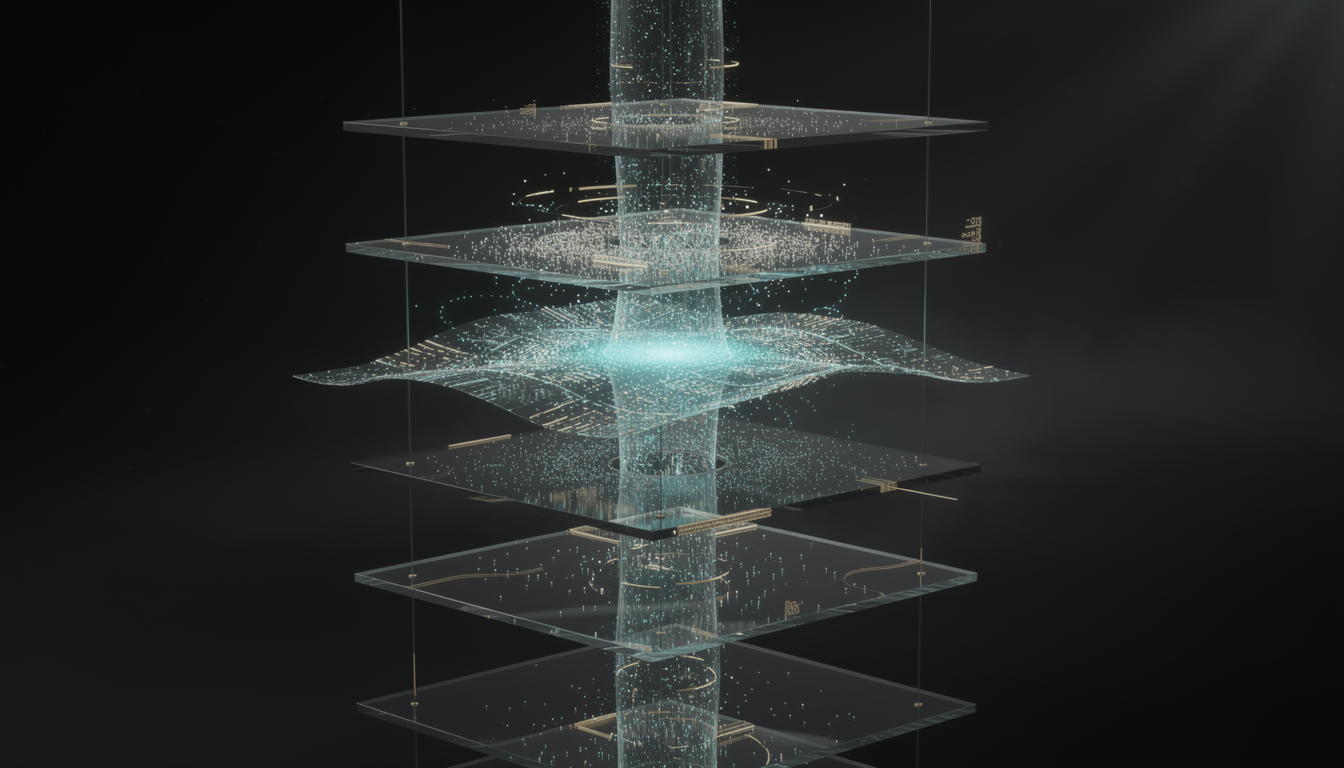
Brains and organizations both belong to a class of systems called distributed adaptive systems. When coordination holds, stability emerges. When it degrades, instability propagates.
The neuroscience here is well-established. Creative and intentional action requires a dynamic balance between the brain's executive control network, which focuses and selects, and its default mode network, which simulates, associates, and generates. These two systems are naturally in tension — and the brain's salience network acts as a switching mechanism between them, routing attention based on what the moment demands.
Disrupt the balance in any direction and the failure is immediate: too much executive control produces fixation and premature closure; too much generative divergence produces drift without commitment; a miscalibrated salience system produces the chronic urgency that makes everything feel like a crisis, even when it isn't.
Organizations exhibit these same failure signatures. Hierarchical over-control mirrors executive hyperactivation. Strategic drift without execution mirrors divergent network dominance. A culture of permanent urgency mirrors salience miscalibration. Cross-functional incoherence mirrors what neuroscientists call network desynchronization: the components are active, but they are not integrated.
One of the most important insights from the neuroscience is the timing of these failures. Research by Arnsten and others has shown that stress-induced degradation in the prefrontal cortex begins well before any observable drop in performance. The system is already compromised before the external observer notices anything wrong.
The same dynamic operates at the organizational scale. Load asymmetry, the uneven distribution of decision-processing demands across layers, destabilizes integration quietly, below the threshold of visible malfunction, until pressure exposes what was already broken. This is why high-pressure moments so often produce failures that seem sudden but were structurally inevitable: pressure does not create weakness, it reveals it.
The NeuroArt Framework identifies three structural forces through which integration degrades:
Decision Transfer
Decision Distortion
Coherence Fragmentation
The practical implication is this: organizational resilience is not primarily a cultural or motivational problem. It is an integration architecture problem. And integration architecture can be measured, diagnosed, and designed — if you know what to look for.
Research 004 is part of the NeuroArt Applied Program — translational research connecting the architecture of intentional cognition to the structure of high-performance decision systems.
Access Full Research Paper
PDF // Detailed Intervention Protocols