NeuroArt Insights™
Field-tested analyses revealing how pressure reshapes execution, alignment, and decision-making inside complex technical environments.
These insights highlight patterns leaders cannot measure with KPIs — the invisible behavioral logic shaping performance under load.
INSIGHT FRAMEWORKS
Behavioral Breakdown Map™
This framework exposes the invisible behavioral chain reactions that destabilize execution under pressure.
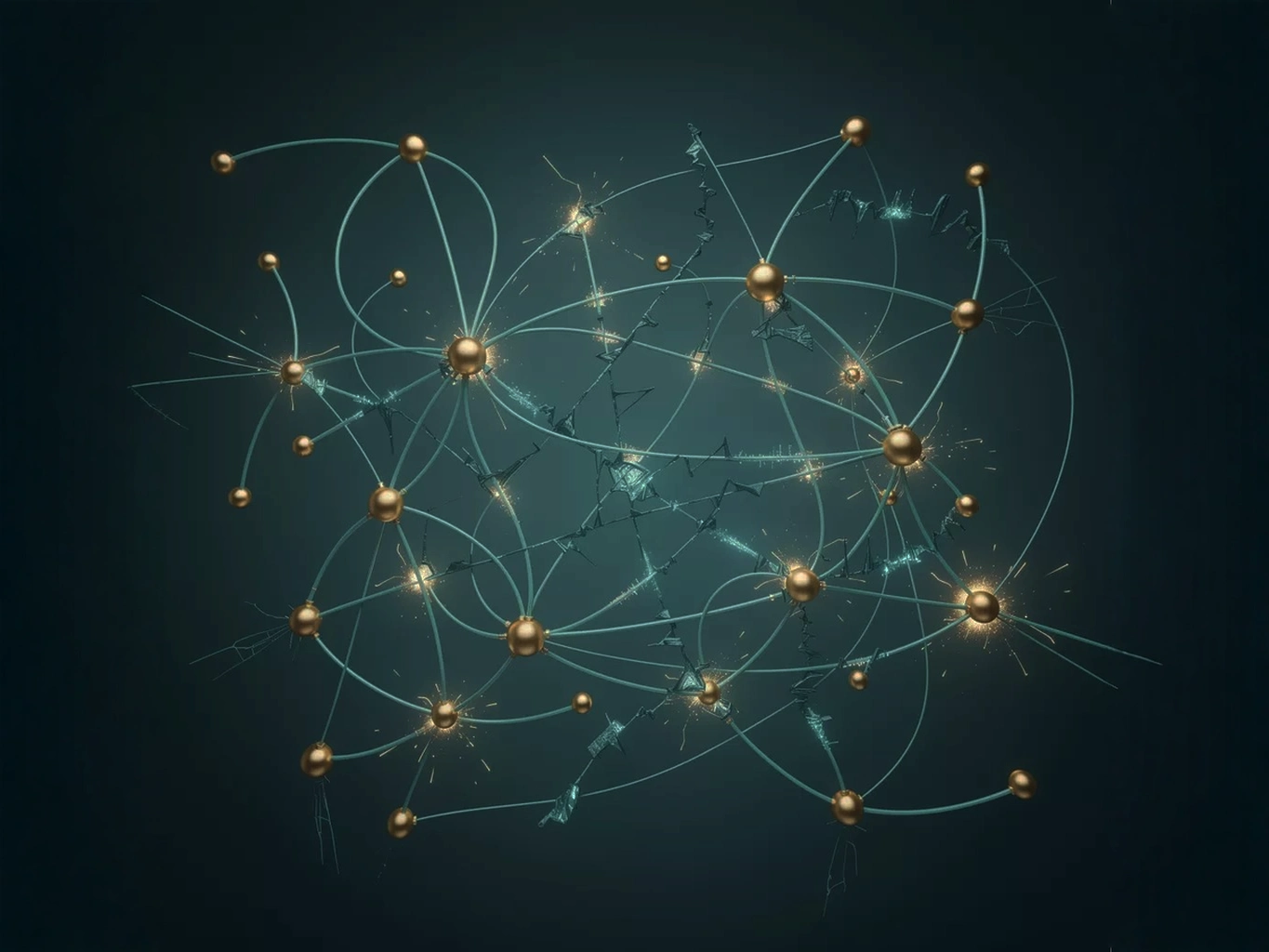

A visual representation of how pressure fractures behavioral coherence — and how alignment restores precision across systems.
INSIGHT TAXONOMY
Behavioral Insight Models™
How pressure-driven patterns distort execution inside technical organizations.
Why high-performing teams lose synchronization under load.
Behavioral coherence is the shared mental map that allows individuals to act as a unified system.
Under pressure, this map fractures: signals become inconsistent, priorities diverge, and roles drift.
Teams begin compensating for the behavior of others instead of executing the original plan. This decay is gradual and nearly invisible — until performance collapses abruptly.
Core Insight:
The first failure in any complex environment is not technical execution.
It is the loss of coherence across the behavioral network.
How operational pressure silently rewrites behavioral logic inside technical teams.
When load increases, technical environments don’t fail at the task layer — they fail at the behavioral layer that leaders cannot see.
Pressure compresses attention, accelerates cognitive shortcuts, and forces individuals into rapid pattern matching.
This shift alters how teams interpret signals, coordinate workflows, and prioritize actions long before execution metrics decline.
Core Insight:
Operational failures emerge after behavioral patterns have already changed.
Pressure does not create new behaviors — it amplifies the misalignment already present in the system.
How pressure reshapes communication and erodes customer trust.
In high-stakes commercial environments, rising pressure pushes teams from aligned messaging toward adaptive, improvised communication.
Reps adjust tone, detail, and technical claims in real time to reduce friction, unknowingly generating inconsistent signals across the customer journey.
The distortion is behavioral, not tactical: teams believe they are being “helpful,” but the organization loses coherence.
Core Insight:
What leaders read as a “sales problem” is often a breakdown in behavioral alignment — triggered by pressure, not by skill deficits.
How coordinated workflows convert into reactive behavior under stress.
Operational Drift occurs when teams gradually shift from strategic execution to reactive problem-solving.
Tasks multiply, priorities shift moment by moment, and individuals compensate for miscommunications upstream.
The organization still appears active — but the work no longer moves in a coordinated direction. Drift is not chaos.
It is a predictable behavioral adaptation to misalignment.
Core Insight:
Organizations do not drift because people stop working.
They drift because people stop working in the same direction.
How cross-functional teams lose alignment when pressure accelerates.
Under load, functional units begin interpreting goals through their own pressure filters: sales accelerates, operations protects capacity, quality constrains risk, supply chain shifts priorities, leadership changes expectations.
The system fragments into parallel realities, each internally logical but externally conflicting.
Fragmentation is not a failure of discipline — it is a behavioral divergence driven by competing stress responses.
Core Insight:
Execution fragments when teams no longer share the same mental model of what “good performance” looks like under pressure.
The invisible process that breaks reliability long before performance drops.
Alignment failure begins when micro-signals — tone, interpretation, priority, timing — drift out of sync.
Teams still communicate, but they no longer mean the same thing when they use the same words. This misalignment expands quietly until precision collapses across functions.
It is not a communication issue.
It is a structural behavioral divergence that amplifies under stress.
Core Insight:
Organizations believe alignment breaks suddenly.
In reality, it erodes slowly — and becomes visible only at the moment of failure.

Why These Insights Exist
NeuroArt Performance works inside environments where pressure rewires behavior long before performance drops.
These Insights exist to expose what organizations cannot measure on their own: how coordination erodes, how judgment distorts, and how behavioral drift silently reshapes execution under load.
They reveal the invisible operating logic that governs technical teams — the patterns leaders only notice after reliability collapses.
Your Next Step...
We don’t coach
We engineer behavior
Choose Your Path to Behavioral Precision
If you’re not measuring pressure behavior, you’re not managing performance. Take control of the layer that decides everything.