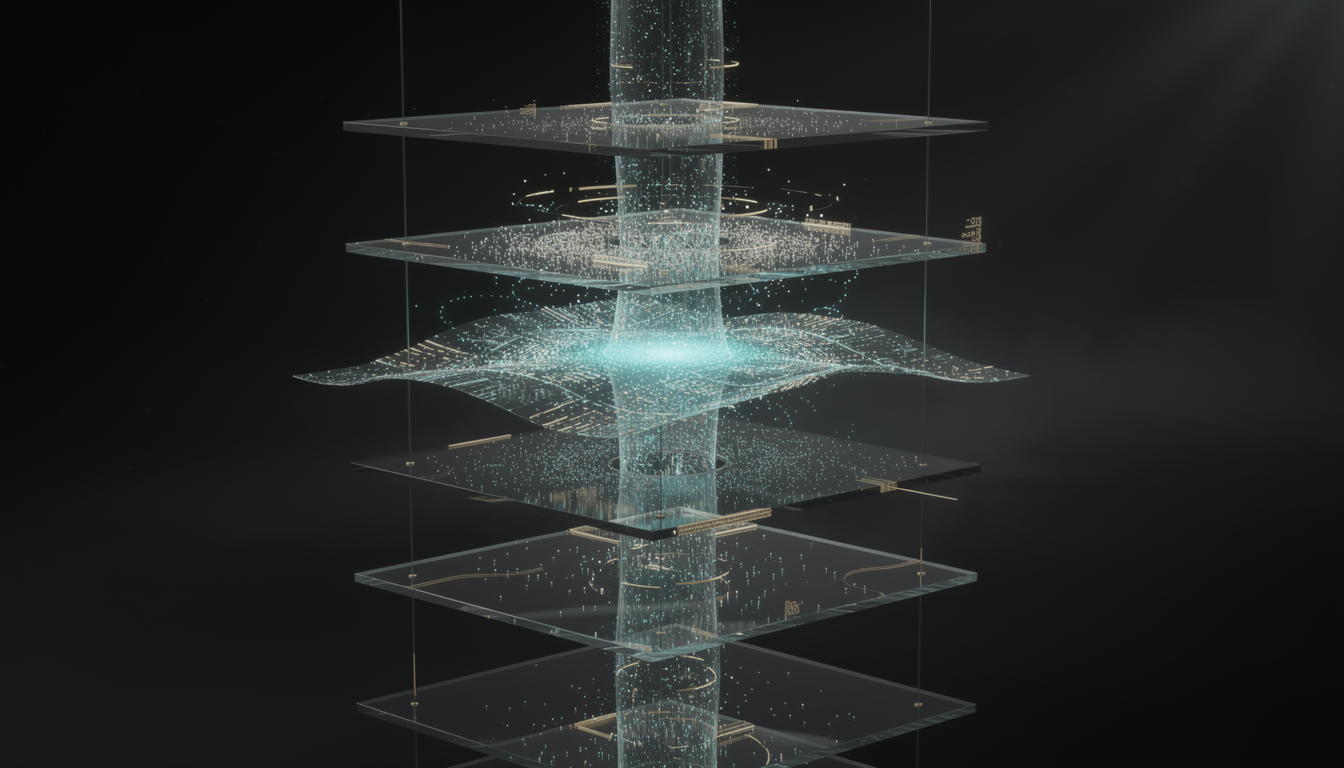
Stabilizing Complex Systems Under Pressure
Executive Summary
Organizations rarely fail because they lack insight. They fail because they act without stabilizing the systems they have just diagnosed.
Most diagnostic efforts identify symptoms, patterns, or root causes—but stop short of redesigning the conditions that produced them. This white paper presents a behavioral systems approach that connects diagnosis to stabilization through the use of System Signals. Rather than treating behavior as an isolated domain, NeuroArt Performance (NAP) frames it as an interdependent property of a system that must be stabilized—not corrected piecemeal.
1. The Gap Between Diagnosis and Change
In complex organizations, diagnosis is often treated as an end state: reports are delivered, findings are presented, and recommendations are approved. Then the system returns to motion.
What is missing is stabilization. Without it, insights decay, interventions overload people, execution absorbs unresolved tension, and drift resumes under pressure.
2. A Systems View of Behavior
NAP rejects the idea that behavior is the primary unit of change. Behavior is an output, not a lever. People adapt to survive systems; deviations emerge to preserve function. Treating behavior as the problem misidentifies the failure point.
The system must be redesigned so that desired behavior becomes the path of least resistance.
3. System Signals as the Diagnostic Backbone
NAP uses System Signals to detect degradation before collapse. No single signal is sufficient; stability depends on their combined behavior:
Whether decisions retain intent across layers.
Alignment between rules, incentives, and execution.
Consistency without human overcompensation.
Balanced distribution of decision capacity.
Permanence of urgency and exception handling.
Normalization of deviations over time.
4. Why Interventions Fail Without Signal Alignment
Organizations often intervene at the wrong layer: training when integrity is broken, or process optimization when cognitive load is concentrated. These interventions may improve local performance while worsening systemic instability.
NAP treats interventions as conditional: what can be changed depends on which signals are degraded—and in what order.
5. THE CORE OBJECTIVE
Stabilization as Capacity Restoration
Stabilization is not improvement; it is capacity restoration. A stabilized system reduces the need for escalation, preserves decision intent, and absorbs pressure without drift. It creates the conditions under which improvement becomes possible.
A stabilized system stops consuming people to survive itself.
6. The Behavioral Systems Approach
NAP connects diagnosis to stabilization through three principles:
- Signals precede solutions: Interventions are selected only after signal relationships are understood.
- Design before enforcement: Governance and behavior are shaped structurally, not corrected retroactively.
- Stability before optimization: No system should be optimized while it is unstable.
7. Stabilization as a Governance Function
Governance is often confused with control. In NAP, governance serves to preserve coherence, surface trade-offs explicitly, and maintain integrity under pressure. Stabilization is not an operational task—it is a governance responsibility.
8. The Cost of Skipping Stabilization
When stabilization is ignored, execution absorbs unresolved tension, leadership becomes a bottleneck, and transformation exhausts capacity. The organization appears responsive and busy—while becoming structurally fragile.
9. What Changes When Systems Are Stabilized
When stabilization follows diagnosis, behavior requires less effort, execution becomes predictable, and leadership load decreases. Most importantly, transformation regains credibility.
10. Conclusion
A behavioral systems approach does not ask people to perform better. It redesigns the system so that performance no longer depends on heroics.
Diagnosis without stabilization is incomplete. Intervention without signal alignment is destabilizing.
Stop diagnosing symptoms. Start stabilizing the system.